

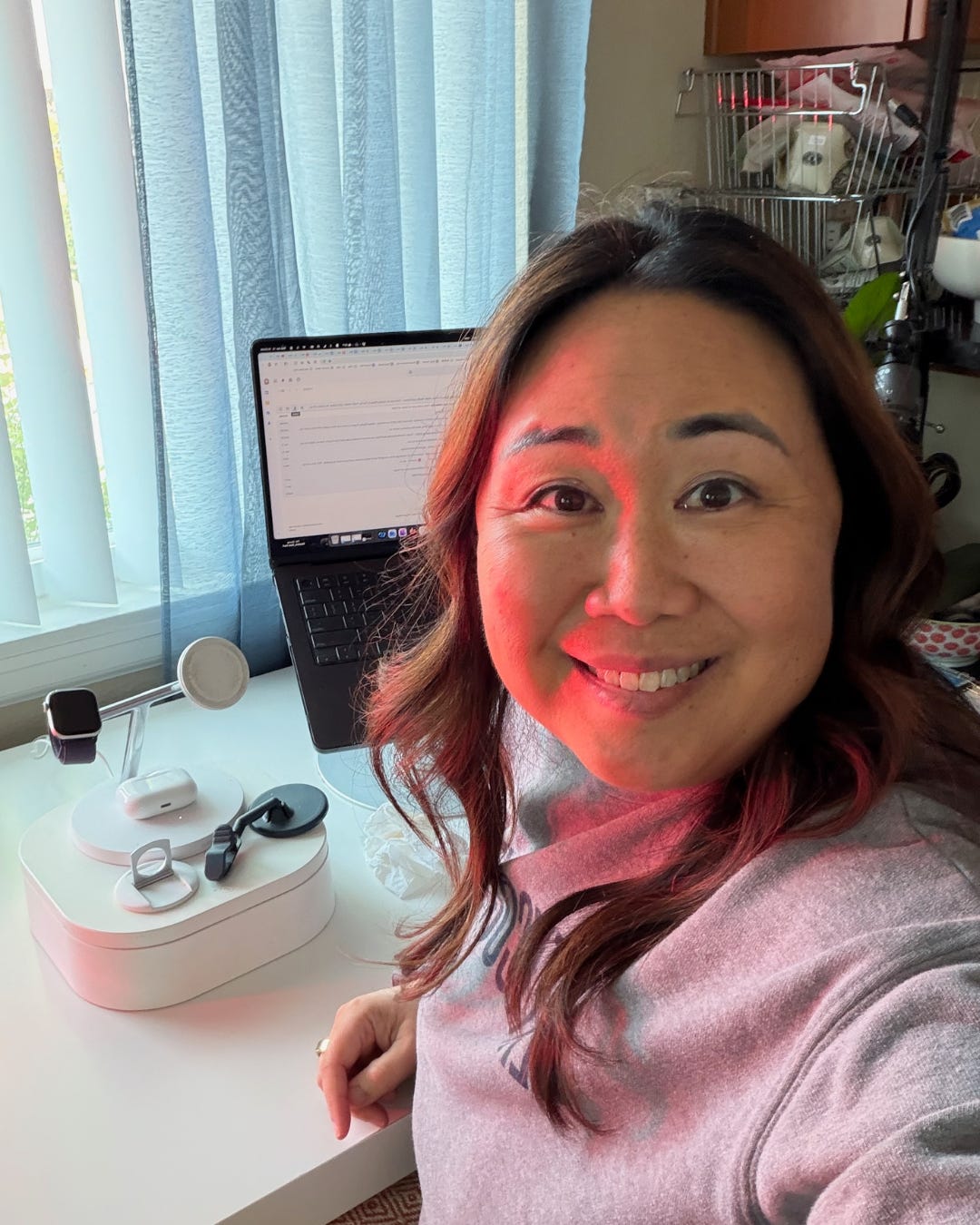
Two weeks ago, after 18 years at my tech company, I was RIF’d - a fancy industry term for “reduction in force.” Plainly speaking, I was laid off.
I’ve worked in tech for 26 years. There’s always a low-grade anxiety about layoffs - it’s just par for the course in this space. I first joined my company in 2008, in the midst of global economic turmoil, so there’s a sense of pride in lasting 18 years. As many colleagues have told me, “What a great run you had.” And it was.
If you’ve paid attention to the news, you know this has been the trend in tech - companies laying off thousands of workers for a variety of reasons, but mostly under the premise of “AI.”
So being “impacted” - more tech industry lingo for being laid off - wasn’t a surprise. It was inevitable. I often thought to myself, “How will it end?”
But as expected as it was, I experienced unexpected emotions during the call when I was read the HR script informing me that my role was being eliminated, and in the days after.
The Emotional Reality
It’s been a process, ending this 18-year chapter of not just my career, but my life. It’s one of those things where you intellectually know what’s happening and what to expect, but when you actually go through it, it’s completely different than what you envisioned.
There’s a strange kind of grief that settles in. The night I was laid off, I had the sudden realization that I would no longer be working with my colleagues - my daily connections who were part of my everyday routine, despite the fact that we all worked virtually.
I likened this to how it felt at the end of freshman year in college, when my first college friends and I were all moving out of the dorms to live in different areas, knowing that the group would never be like that together again.
There’s the reckoning of how much of my identity was tied up in my work, especially after nearly two decades. And honestly? I’m feeling a mix of emotions - grief, unease with an uncertain future, excitement at the possibilities of what might come my way, but most of all, relief.
Living under the anxiety of quarterly layoffs, wondering if “this time” would be “my turn” - well, no one should live that way. It’s toxic, it’s unhealthy, and to have it finally happen, as weird as this sounds, is relieving.
A Shift and an Expansion
I’ll be using this space to reflect on this transition and what it’s revealing about the things I thought I knew about work, productivity, and identity that are now becoming visible as they unravel.
In a way, I’m curious for this experience because its another lens to examine the cultural patterns we accept without question.
We’re conditioned to believe that career stability equals security, that 18 years at a company means something about our worth or our future. That losing a job is a failure rather than a redirection. That we should immediately start networking, updating our LinkedIn, and following traditional career advice about “what’s next.”
But what if we approached this differently? What if instead of defaulting to cultural scripts about career transitions, we used Human Design to navigate what’s actually happening?
I’m a Projector with Splenic Authority. My energy doesn’t work on traditional timelines. My insights come from recognition, not from forcing my way into the next opportunity. My Authority tells me what’s right in the moment, not what “should be” right according to experts.
There’s so many things spinning around in my head - the emotions and reflections that come up as I’m decoupling from company identity, decompressing from 18 years of routine, figuring out what’s next using my design rather than only defaulting to conventional next steps. These are the things I’m ruminating on, the patterns I’m noticing as they surface.
I’m sitting with all of this and noticing things I didn’t see before. The assumptions about work and identity that felt so solid are now visible and there for examination.
I keep catching myself defaulting to what I’m “supposed” to do next - update LinkedIn, start networking, follow the playbook. But my Splenic Authority keeps saying, “okay, but also, give yourself time and space to also sit with this.”
So I’m sitting with it. And seeing it as an invitation and opportunity to examine what I thought I knew about how work defines us, how much of our identity gets wrapped up in company culture, how we’re conditioned to move through career transitions.
What would it look like to navigate this from my Human Design instead of from what everyone expects? I’m finding out.
If you’ve ever had your work identity suddenly removed, you might recognize some of this. If you haven’t, maybe it’ll make you think about what assumptions you’re carrying without questioning them.
I’m not sure where this leads. But I’m curious to find out.